
Amber in Jarosławiec — where to look and how to recognise it
What Baltic amber is, how to recognise it and where to see collections in the Amber Museum in Jarosławiec.
Amber has been linked to the history of Jarosławiec for centuries — the inhabitants made a living from gathering and working it. Today you can find it on the shore after storms or see it in the museum.
What Baltic amber is
It is fossilised resin of coniferous trees, formed in the Eocene — about 49 million years ago. Its density (0.96–1.096 g/cm³) is close to that of sea water, so it can float in strongly salted water. Its hardness on the Mohs scale is 2–3.
How to recognise it
- to the touch it is warm, and when warmed in the hand it gives off a pleasant smell
- when rubbed it becomes electrostatically charged
- it burns with a bright flame and a smell similar to incense (do not do this with valuable pieces)
- it can be yellowish, honey-coloured, milky white, brown, rarely bluish or greenish
Amber is hard to identify with certainty without tests — the best check is infrared spectroscopy. Fakes made of glass and resins are easy to produce, so simple home tests are not conclusive.
Where to look
Amber is thrown onto the shore by waves, most often after strong storms. According to Wikipedia, the former inhabitants of Jarosławiec fished it out of shells and algae with baskets. Before you start collecting, check the regulations and the rules on the beach.
The Amber Museum
Jarosławiec has an Amber Museum in the Hotel Szlak Bursztynowy complex — a scenographic museum of Baltic amber with about 1500 exhibits. According to Wikipedia, its more valuable exhibits include a piece of amber weighing 2906 g, blue amber and inclusions of insects and a pine cone.
📚 Read also
 🌊 Nature
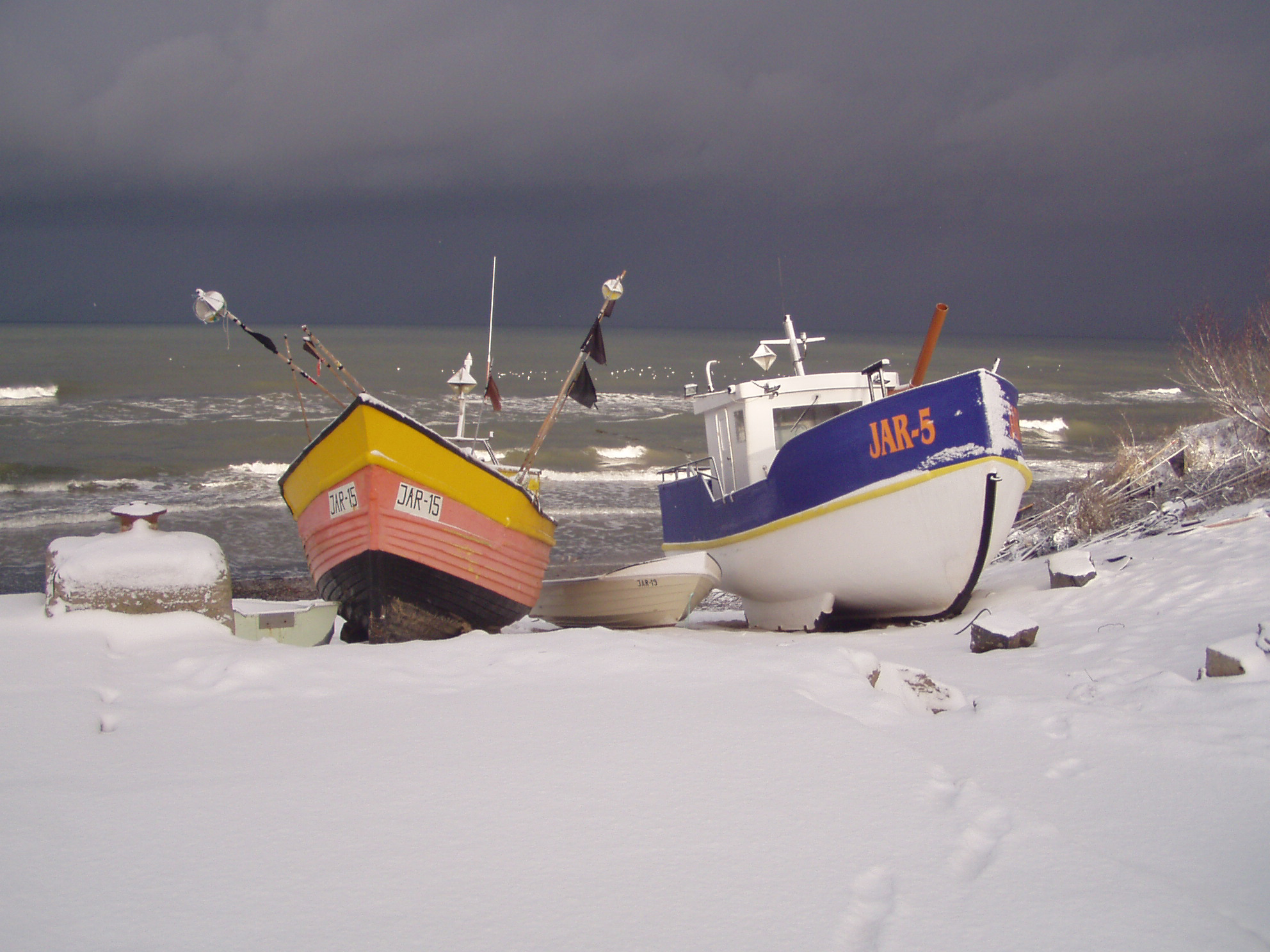
Storms in Jarosławiec — how to watch them safely
Off-season storms: how to watch and photograph them safely and what is left on the shore afterwards.
Czytaj dalej → 🍽️ Food
Fish from the Baltic — what to eat in Jarosławiec
Which fish are eaten on the Baltic, how to choose a fish-fry bar and where to buy fresh fish.
Czytaj dalej → 🗺️ Guides
What to do in Jarosławiec when it rains? Ideas for a rainy day
Ideas for a rainy day: a museum, the aquapark, an indoor ski slope, an open-air museum and a trip to Darłowo.
Czytaj dalej →Planning a holiday in Jarosławiec?
Check accommodation, dining, attractions and events on the portal — all in one place.